by Alli DeMan, Account Manager
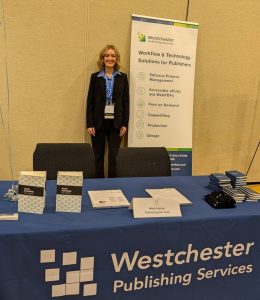 I recently attended PCPA (Protestant Church Publishers Association) 2026, and as possibly the youngest attendee of the conference, I found myself returning often to a central theme of how publishers can better understand and reach people in my age group.
During formal sessions, in side conversations, and in the broader atmosphere of the conference, it was acknowledged that this generation is searching for community, connection, and belonging, with many of us finding this through religion.
Our life is shaped by technology, which may explain why we are drawn to religious spaces. For faith-based publishers who want to reach members of Gen Z, it helps to understand that many readers in this age group engage with religion differently than previous generations. There is strong interest in doctrine as well as the spiritual, philosophical, and exploratory dimensions of faith. Books examining these questions thoughtfully and openly, or that connect religion to culture, art, music, and everyday life, may resonate more strongly with younger adults.
I was particularly struck by the perspectives of Keith Reigert, Fauzia Burke, and Valarie Guagnini, who helped frame these concepts within the larger work of publishing during separate sessions at the conference.
The keynote “Practical AI for Publishers”, included Keith, founder of Stable Book Group, who I first heard at a session he presented about AI during the NYU Summer Publishing Institute program. It was both intriguing and thought provoking to hear how leaders in the industry think about AI, with opinions ranging from a human-focused AI model to more technology forward thinking. As people become more reliant on AI for what they write, think, and feel, I believe the publishing industry needs to promote these conversations. It was great to reconnect with Keith at PCPA and his excitement and passion for the future of the industry were infectious, leaving me inspired to embrace the future of technology.
My colleague, Tyler Carey, moderated the second keynote session “Accessible Publishing to Serve More People”. Valarie Guagnini, Cambridge University’s Head of Equity, Diversity, Inclusion & Belonging, was one of the panelists, and she brings a unique perspective to the topics of accessibility, faith, and human-first based AI thought. During the discussion, she shared that accessibility shouldn’t be viewed as a checklist of tasks to complete, but as an opportunity to love thy neighbor. This resonated strongly with me and I’m sure with many of the other attendees.
A few weeks prior to the conference I also participated in a webinar hosted by PCPA, “How Christian Publishers Can Reach Gen Z”, which discussed some of the ideas that were further expanded on during the conference. That consistency stood out to me, with the same underlying message being shared across both the webinar and the conference: Publishers who want to connect with Gen Z need to do so with nuance and authenticity. For me, the takeaway from PCPA was not that publishers need to chase trends, but that they need to better understand a generation who are asking serious questions about identity, meaning, creativity, and belonging.